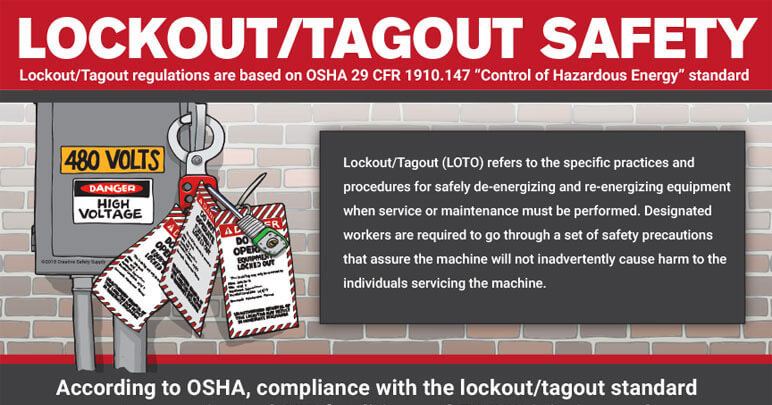
Equipment failure doesn’t cause most industrial injuries—procedural gaps do. When machinery is being serviced, uncontrolled release of hazardous energy accounts for nearly 10% of serious incidents in manufacturing. Lockout tagout safety signs are not just visual cues; they’re the frontline defense in energy control protocols. These signs bridge the gap between procedure and practice, ensuring workers recognize isolation status immediately.
Yet, too many facilities treat LOTO signage as a checkbox task—generic labels slapped on breakers, poorly placed tags, or missing signage altogether. That's a compliance and culture failure. Done right, lockout tagout safety signs are engineered tools: standardized, durable, and impossible to ignore. This guide breaks down what makes them effective, where they must be used, and how to deploy them for maximum safety impact.
Why Lockout Tagout Safety Signs Matter
Lockout tagout (LOTO) is a systematic process to isolate energy sources—electrical, hydraulic, pneumatic, thermal, or mechanical—before maintenance. Signs play a non-negotiable role in this process. They communicate:
- That a machine is locked out
- Who applied the lock
- Why the system is offline
- When it might return to service
Without clear signage, even a properly locked machine becomes a risk. A night-shift technician unaware of a day-shift lockout might attempt to restart equipment, triggering disaster. According to OSHA, proper use of LOTO procedures prevents an estimated 120 fatalities and 50,000 injuries annually in the U.S. alone.
But signs aren’t just about compliance. They reinforce safety culture. When every tag carries a name, date, and purpose, accountability becomes visible. Workers internalize that energy control isn't abstract—it's personal.
OSHA and ANSI Standards for LOTO Signs
Regulatory alignment starts with standards. Two bodies dominate in North America: OSHA (Occupational Safety and Health Administration) and ANSI (American National Standards Institute).
OSHA 29 CFR 1910.147 mandates that employers implement a written LOTO program, including signage. Key requirements:
- Tags must clearly indicate the device is locked out
- Information must include the employee’s name and reason for lockout
- Tags must be durable enough to withstand the environment
- Tags must be standardized within the facility (same format, color, wording)
While OSHA doesn’t specify color codes for signs, it defers to ANSI. ANSI Z535.5-2022 establishes design standards:
- Danger Signs: Red, black, and white—used when immediate hazard could cause death or serious injury
- Warning Signs: Orange, black—used for potential serious injury
- Caution Signs: Yellow, black—used for non-immediate or minor injury risks
- Notice Signs: Blue, white—used for non-hazard messages, like mandatory PPE or procedural notes
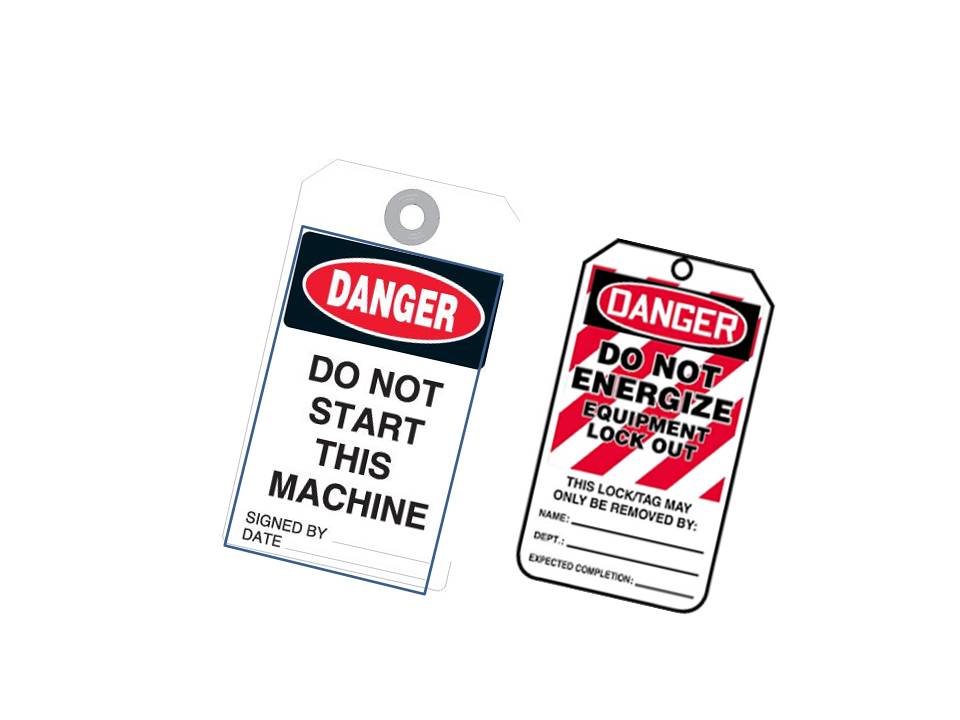
For LOTO, Danger is typically the appropriate signal word. A red "Danger – Do Not Start" sign on a transformer panel leaves no room for misinterpretation.
Types of Lockout Tagout Safety Signs and Tags
Not all signs serve the same purpose. Understanding the hierarchy helps deploy the right tool for the job.
#### 1. Standard Lockout Tags These are the most common—personalized tags attached directly to lockout devices. They include: - Employee name - Department - Date and time of lockout - Reason for lockout
They’re not reusable, designed to be discarded after each use. Common mistake: using shared or generic tags. OSHA requires individual accountability—John’s tag cannot be used by Maria.

#### 2. Group Lockout Tags Used when multiple workers service a single machine. A central lockbox holds individual locks, with a master tag listing all involved personnel. These must be coordinated and removed only when everyone is clear.
#### 3. Energy Isolation Signs Fixed signage installed near energy control points—circuit breakers, valve banks, disconnects. These are permanent signs that say: - “Lockout Procedure Required” - “Authorized Personnel Only” - Show lockout point locations
They act as reminders before any work begins.
#### 4. Machine-Specific LOTO Signs Custom signs mounted directly on equipment. These often include: - Step-by-step LOTO procedures - Locations of all energy sources - Required PPE - Emergency contacts
For complex systems like conveyor lines or chemical reactors, these signs eliminate guesswork.
#### 5. Out-of-Service Signs Used post-lockout to indicate equipment status. Unlike lockout tags, these may remain longer—e.g., during repairs or calibration. Often used with physical barriers or lockout hasps.
Common Mistakes That Undermine LOTO Sign Effectiveness
Even with the right signs, human and system errors can render them useless.
1. Poor Visibility A tag buried behind a pipe or facing the wall defeats its purpose. Signs must be placed so they’re immediately visible during normal approach.
2. Illegible or Faded Text UV exposure, grease, or moisture can make plastic tags unreadable in weeks. Use UV-resistant, chemical-proof materials—especially in food processing or outdoor environments.
3. Incomplete Information “Do Not Operate” without a name or date invites temptation. Workers may assume the lockout is old or forgotten. Complete data prevents assumptions.
4. Using Tags as Labels Tags are temporary. Painting “LOCKOUT POINT” on a breaker panel? That’s a sign, not a tag. Confusing the two leads to inconsistent use.
5. Lack of Training Reinforcement Signs only work if workers understand them. New hires might not know that a red tag means “life-threatening risk.” Regular drills and visual literacy training are essential.
Best Practices for Designing and Deploying LOTO Signs
Effective signage follows engineering principles, not just compliance.
Use Standardized Templates Every LOTO tag in your facility should follow the same layout. This reduces cognitive load. When Maria sees a red tag with a bold name and timestamp, she knows instantly what it means—even in a crisis.
Leverage Visual Hierarchy Put critical info at the top: “DANGER – DO NOT ENERGIZE.” Use bold fonts, contrast colors, and symbols (like a padlock icon) to draw attention.
Choose the Right Material - Indoor use: Polyester or vinyl - Outdoor/harsh environments: Aluminum, stainless steel, or polycarbonate - High-heat areas: Ceramic or anodized metal
Avoid paper—even laminated. It tears, fades, and fails under stress.
Integrate with LOTO Procedures Signs should reflect your written program. If your SOP requires dual verification for high-risk systems, your sign should note: “Two Authorized Personnel Required for Release.”
Audit and Replace Include signage in monthly safety inspections. Are locks clearly tagged? Are signs damaged? Are outdated tags still present? A cleanup drive every quarter prevents complacency.
Real-World Use Cases: Where LOTO Signs Prevent Disasters
Case 1: Preventing Restart During Conveyor Repair At a packaging plant, a technician locks out a conveyor drive and places a red tag with his name, shift, and work description. A forklift operator walking by sees the tag and knows not to test-run the line. Without that tag, a crushed hand could result.
Case 2: Multi-Craft Lockout in Power Generation During turbine maintenance, five workers apply locks. A group lockout board displays all names. A supervisor confirms every lock is removed before re-energizing. The sign on the board reads: “All locks must be removed by owner. No exceptions.” This prevents a cascade failure.
Case 3: Chemical Valve Isolation In a refinery, a valve controlling a pressurized amine line is tagged: “DANGER – SYSTEM UNDER PRESSURE. LOCKOUT IN PROCESS.” The sign prevents an accidental open that could release toxic gas.
Each case hinges on one thing: the sign made the invisible hazard visible.
Choosing the Right LOTO Safety Sign Products
The market offers dozens of options. Here are five proven solutions trusted in industrial settings:
| Product | Material | Key Features | Best For |
|---|---|---|---|
| Brady LOTO-8-IL | Polypropylene | Pre-printed, UV-resistant, write-on areas | General maintenance |
| Grainger 3ZWK5 | Polyester | Tamper-resistant, dual-language (EN/ES) | Multilingual teams |
| Seton 516062 | Vinyl | Perforated for duplicate records, waterproof | High-moisture areas |
| Master Lock 1701T | Polyester/Plastic | Reinforced hole, anti-counterfeit logo | High-security zones |
| NSN Safety LOTO-KIT | Aluminum | Custom engraving, permanent installation | Fixed control points |
Invest in quality. A $0.50 tag that fails under grease is a liability. Spend $2 for one that lasts and communicates clearly.
The Human Factor: Training and Accountability
No sign works without people. OSHA requires annual LOTO training, but effective programs go further.
- Shadow Drills: Have workers follow a lockout scenario from start to finish, using actual signs and locks.
- Tag Audits: Randomly inspect completed lockouts for proper signage.
- Near-Miss Reporting: Encourage workers to report times they almost bypassed a tag.
- Leadership Walkthroughs: Supervisors should check signage during routine rounds.
When workers see leadership respecting the tag, they’re more likely to do the same.
Lockout tagout safety signs are not bureaucracy. They’re lifelines. In high-risk environments, a few seconds of confusion can cost lives. The right sign—clear, durable, and properly placed—is more than a label. It’s a statement: This machine is not safe. Do not touch.
Audit your current signage. Are your tags complete? Are your signs visible? Do new employees understand them? Update your LOTO program now—before an incident forces the issue.
Choose clarity. Choose consistency. Choose safety.
Frequently Asked Questions
What is the difference between a lockout tag and a safety sign? A lockout tag is temporary and attached to a lock, identifying the person and reason for isolation. A safety sign is often permanent, indicating procedures or hazards near energy sources.
Can I use a whiteboard or sticky note for lockout communication? No. OSHA requires durable, standardized tags. Temporary writing surfaces degrade, lack permanence, and don’t meet compliance standards.
Should LOTO tags be bilingual? If your workforce uses multiple languages, yes. Dual-language tags (e.g., English/Spanish) improve comprehension and safety.
How long can a lockout tag remain in place? Only for the duration of the work. If work extends beyond a shift, proper transfer procedures must be followed with documented handover.
What happens if someone removes a lockout tag? Unauthorized removal is a serious violation and can result in disciplinary action, fines, or criminal liability if injury occurs.
Do I need signs for every lockout point? Yes. Each energy-isolating device must have a tag during servicing. Fixed signs can identify where to lock out, but tags confirm the current status.
Can electronic tags replace physical ones? Not under current OSHA rules. Electronic systems may support LOTO programs, but physical tags on devices are still required.
FAQ
What should you look for in Lockout Tagout Safety Signs: Your Guide to Compliance and Clarity? Focus on relevance, practical value, and how well the solution matches real user intent.
Is Lockout Tagout Safety Signs: Your Guide to Compliance and Clarity suitable for beginners? That depends on the workflow, but a clear step-by-step approach usually makes it easier to start.
How do you compare options around Lockout Tagout Safety Signs: Your Guide to Compliance and Clarity? Compare features, trust signals, limitations, pricing, and ease of implementation.
What mistakes should you avoid? Avoid generic choices, weak validation, and decisions based only on marketing claims.
What is the next best step? Shortlist the most relevant options, validate them quickly, and refine from real-world results.