A maintenance technician reaches into a jammed conveyor belt. The machine hasn’t been powered down properly. In seconds, a restart turns routine maintenance into a life-altering injury. This scenario—and countless like it—could have been prevented with one critical procedure: lockout tagout.
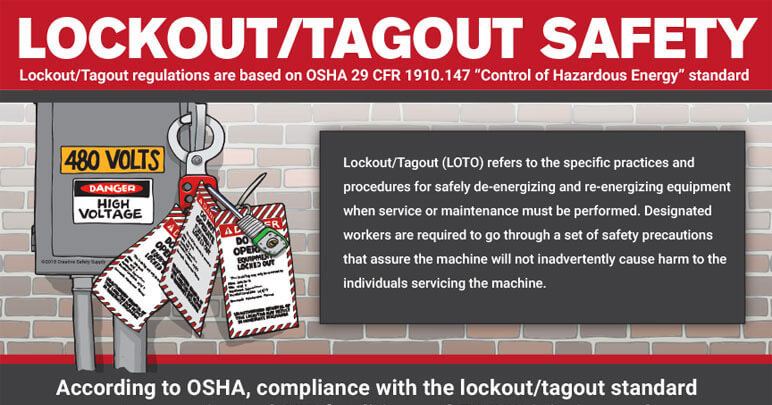
Lockout tagout (LOTO) is a structured safety protocol used to isolate hazardous energy sources during equipment servicing or maintenance. It’s not just a checklist; it’s a lifesaving system designed to ensure machines stay off until work is complete and everyone is clear. Despite its simplicity in concept, missteps in execution remain a leading cause of industrial accidents.
This article breaks down what lockout tagout truly entails, how it works in real-world environments, common failures, and best practices to ensure compliance and safety across operations.
The Core Principle: Control All Hazardous Energy
At its heart, lockout tagout is about control. Machines don’t just run on electricity. They can be powered by hydraulic pressure, pneumatic systems, chemical reactions, gravity, or stored mechanical energy. If any of these sources aren’t properly neutralized, the risk of unexpected startup or release of energy is real—and potentially deadly.
The LOTO process ensures that: - All energy sources are identified and isolated - Locks physically prevent re-energizing - Tags communicate why the lock is in place and who applied it - Only the authorized employee can remove the lock
This dual-layer approach—physical lockout plus visible tagging—creates redundancy. If one fails, the other still provides protection.
Consider a press used in metal fabrication. Even when switched off, residual pressure in hydraulic lines can cause the ram to drop unexpectedly. A proper LOTO procedure would require closing and locking the hydraulic valve, bleeding off pressure, and placing a lock and tag on both the electrical disconnect and the hydraulic control.
Without this, a well-meaning coworker might assume the machine is ready and restore power—trusting the "off" position alone.
How Lockout Tagout Works: A Step-by-Step Breakdown
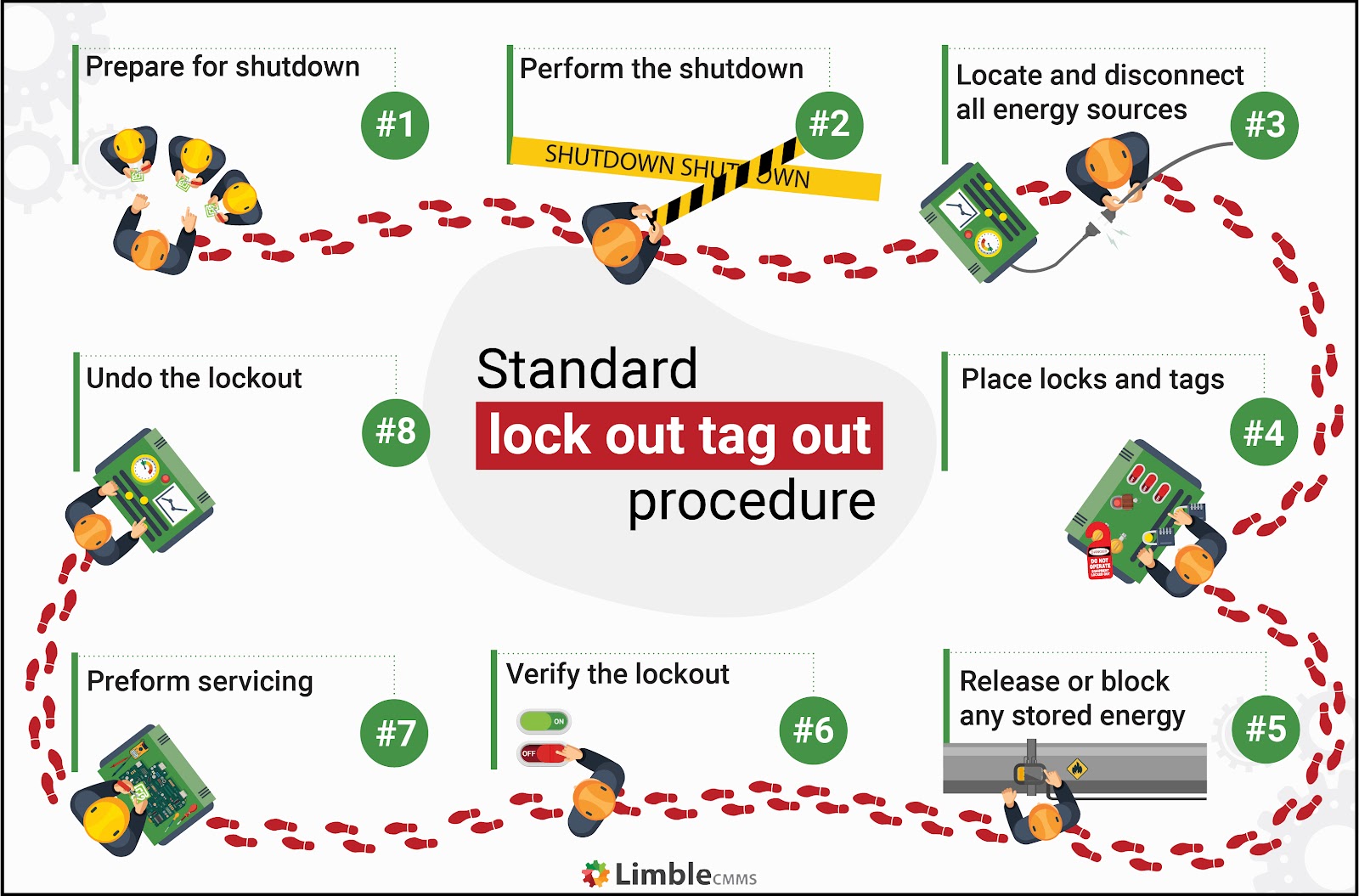
Implementing LOTO isn’t a single action—it’s a sequence. OSHA outlines a seven-step process, but in practice, it often expands based on equipment complexity and workplace conditions.
1. Preparation Before any work begins, the authorized employee must identify all types and sources of energy involved. This includes reviewing equipment schematics, energy flow diagrams, and prior LOTO records.
Common Mistake: Assuming familiarity eliminates the need for documentation. A seasoned technician might skip prep on a "simple machine," missing a secondary power source like a backup battery or accumulator.
2. Notification Affected employees—those who operate or work near the equipment—must be informed that a shutdown is about to occur. This prevents confusion or accidental restarts.
Example: In a packaging line, the operator at Station A needs to know the upstream sealer is being serviced so they don’t keep feeding product into a stopped system.
3. Shutdown Use normal stopping procedures. This ensures the machine cycles down safely and reduces residual energy.
4. Isolation Disconnect all energy sources. This means flipping breakers, closing valves, blocking moving parts, or disconnecting hoses.
Critical Detail: Isolation points must be lockable. A valve without a lockable handle defeats the purpose—even if tagged.
5. Application of Locks and Tags Each authorized worker applies their personal lock and tag. Group lockout boxes are used when multiple people are working on the same machine.
A tag must include: - Name of the person who applied it - Date and time - Reason for the lockout - Contact information (if applicable)
Tags alone aren’t enough. They’re warnings, not barriers. The lock is what physically prevents energizing.
6. Release of Stored Energy

This step is often overlooked. Residual energy in springs, capacitors, elevated parts, or pressurized systems must be safely discharged.
Real-World Example: A mechanic servicing a large air compressor must drain the tank and verify zero pressure before opening any components.
7. Verification Before beginning work, the authorized employee must test the machine to confirm it cannot start. This usually involves trying to start it using normal controls—after ensuring no one is in harm's way.
If the machine activates, the LOTO process failed.
Common LOTO Failures and How to Avoid Them
Even workplaces with LOTO programs suffer preventable incidents. The failures are rarely due to lack of knowledge—they stem from shortcuts, poor design, or cultural complacency.
Failure 1: Using Tags Without Locks Tagout-only procedures are allowed under OSHA when locks can’t be used, but only if additional safety measures are in place. In practice, tags are too easily ignored.
Solution: Invest in retrofit kits to make isolation points lockable. If a breaker doesn’t accept a hasp, modify it—don’t rely on a tag alone.
Failure 2: Group Lockout Confusion
When multiple workers are involved, confusion arises over who controls the master lock. Without a clear procedure, someone may remove a lock prematurely.
Best Practice: Use a group lockout box. Each worker places their lock on the energy-isolating device. The keys to that device go inside the box, which is then locked with each worker’s personal lock. The machine can’t be re-energized until every worker removes their lock.
Failure 3: Incomplete Energy Source Identification Machines today are complex. A CNC machine might have electrical, hydraulic, and data-driven automation systems. Missing one source—like a servo motor’s backup capacitor—can be catastrophic.
Workflow Tip: Develop machine-specific LOTO procedures. One-size-fits-all checklists fail. Document the exact steps, lock points, and energy types for each piece of equipment.
Failure 4: Failure to Train Affected Employees Only authorized employees apply locks, but affected employees must understand the system. They shouldn’t attempt to bypass or remove locks, even if work appears finished.
Training Insight: Conduct hands-on drills. Show what a lockout looks like, explain the tags, and simulate a near-miss scenario to reinforce respect for the process.
Industries Where Lockout Tagout Is Non-Negotiable
LOTO isn’t just for manufacturing. Any environment with machinery or energy systems needs it.
Manufacturing Assembly lines, presses, robotic arms—these systems store kinetic and electrical energy. Routine maintenance without LOTO leads to amputations, crush injuries, and electrocution.
Utilities Power plants, water treatment facilities, and electrical substations handle high-voltage systems. Lockout is essential during inspections or repairs.
Healthcare Hospitals use large sterilizers, HVAC systems, and medical gas setups. A misstep can lead to gas leaks or equipment failure during critical procedures.
Agriculture Grain elevators, tractors, and feed mixers have moving parts and power take-offs (PTOs). Entanglement is a leading cause of farm fatalities—many preventable with LOTO.
Construction Cranes, compactors, and welding rigs require lockout during servicing. On mobile equipment, battery disconnects and hydraulic lockouts are critical.
OSHA Requirements and Legal Implications
In the U.S., OSHA’s 29 CFR 1910.147 sets the standard for control of hazardous energy. Non-compliance isn’t just unsafe—it’s expensive.
Key OSHA mandates: - Written LOTO procedures for each machine - Annual inspections of LOTO practices - Training for both authorized and affected employees - Use of durable, standardized locks and tags
Penalties: OSHA fines for LOTO violations regularly exceed $15,000 per instance. In cases involving serious injuries, fines can climb into the hundreds of thousands.
More importantly, failure to comply can lead to criminal liability if an incident results in death or severe harm.
Recent Case: In 2022, a food processing plant was fined over $100,000 after a worker lost an arm when a mixer restarted during cleaning. The investigation found no written LOTO procedure and no locks in use—only tags.
Building a Sustainable LOTO Program
A checklist on the wall isn’t a program. A sustainable LOTO system is integrated into daily operations, reinforced by culture, and supported by management.
Key Components:
- Machine-Specific Procedures: One general procedure doesn’t cover all equipment. Create tailored instructions with diagrams and photos.
- Annual Audits: Supervisors must observe LOTO in action and verify compliance. Document findings and correct gaps.
- Employee Ownership: Workers should feel empowered to stop work if LOTO isn’t followed. No retaliation—ever.
- Digital Support: Some facilities use LOTO software to track lock applications, generate work permits, and schedule audits.
Pro Tip: Conduct surprise drills. Announce a mock maintenance scenario and see how teams respond. It reveals gaps in training and procedure faster than any audit.
Real-World Example: Success in a High-Risk Plant
A Midwest automotive parts factory reduced its lost-time incidents by 74% over two years—primarily by overhauling its LOTO program.
Before: - Generic checklists - Shared locks - No group lockout system - Infrequent training
After: - 120 machine-specific LOTO procedures created - Personal locks issued to each authorized employee - Group lockout boxes installed at all multi-worker stations - Quarterly hands-on training with real equipment - Monthly supervisor audits
One technician noted: “We used to rush through lockout because it felt like paperwork. Now we see it as armor. Every lock is a decision to go home safe.”
Final Thoughts: LOTO Is More Than Compliance—It’s Commitment
Lockout tagout isn’t a bureaucratic hurdle. It’s a promise—a commitment to never assume safety, but to verify it.
Machines don’t remember. They don’t know who’s inside them. Only disciplined procedures do.
Whether you’re a safety manager, technician, or operations lead, your role is clear: define the process, train without compromise, audit relentlessly, and never normalize exceptions.
Start today. Pick one machine. Review its energy sources. Build a real LOTO procedure—not a template, but a living document. Test it. Improve it. Then do it again for the next one.
Safety isn’t maintained by policy alone. It’s built one lock, one tag, one decision at a time.
What is the difference between lockout and tagout? Lockout uses a physical device (like a hasp or lock) to prevent energy restoration. Tagout uses a warning tag. Lockout provides physical security; tagout provides information. OSHA requires lockout whenever possible.
Who is responsible for applying lockout devices? Only authorized employees—those trained and certified in LOTO procedures—can apply or remove locks and tags. Affected employees (operators) are not permitted to do so.
Can multiple people work under one lock? No. Each worker must apply their own personal lock. Group lockout boxes ensure that all individuals must remove their locks before energy can be restored.
How often should LOTO procedures be reviewed? OSHA requires annual inspections of each LOTO procedure. These must include a review of employee knowledge and actual performance of the steps.
Are there exceptions to lockout tagout? Yes, for minor tool changes or routine tasks that occur during normal production, OSHA allows alternatives like machine guarding—provided the risk is minimal and documented.
What should a LOTO tag include? The worker’s name, date, time, reason for lockout, and contact information. Tags must be durable, legible, and securely attached.
Can lockout devices be used for purposes other than safety? No. Lockout devices must be used solely for energy control. Using them for maintenance scheduling or equipment tracking violates OSHA standards and weakens safety culture.
FAQ
What should you look for in What Is Lockout Tagout and Why It Matters for Safety? Focus on relevance, practical value, and how well the solution matches real user intent.
Is What Is Lockout Tagout and Why
It Matters for Safety suitable for beginners? That depends on the workflow, but a clear step-by-step approach usually makes it easier to start.
How do you compare options around What Is Lockout Tagout and Why It Matters for Safety? Compare features, trust signals, limitations, pricing, and ease of implementation.
What mistakes should you avoid? Avoid generic choices, weak validation, and decisions based only on marketing claims.
What is the next best step? Shortlist the most relevant options, validate them quickly, and refine from real-world results.